This two-part webinar series explores a couple of anti-cancer therapies that you may not have heard about. Join Dr Nancy Scanlan as she revisits the dramatic stories of two old technologies that have recently been updated for use in cancer treatment. In both cases, the original research was discredited but has resurfaced and is being used in modern times – indicating that sometimes we should take a second look at the past to get clues to help with current problems!
Part 1 - Revisiting the Warburg Hypothesis
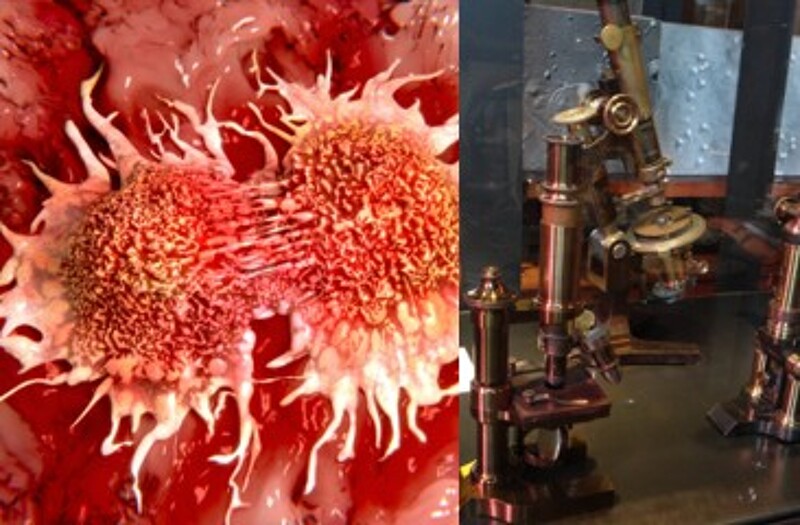
1925: Otto Warburg, MD, PhD, noticed that cancer cells use about eight times as much glucose as a normal cell. He hypothesized that all cancer is caused by a specific abnormal metabolic process in the mitochondria, so it is actually one single disease. Unfortunately, he defended his hypothesis by attacking others, so when he died, people forgot about him and his theory. In the early 1980’s, Thomas Seyfried PhD started looking into Warburg’s research and reproduced the results of Warburg’s early experiments. He published the theory of cancer as a metabolic disease in 2010, based partly on experiments that greatly prolonged the lifespan of glioblastoma patients by using an extreme ketogenic diet to restrict glucose.
Part 2 - Revisiting the Rife Microscope
Royal Raymond Rife created a light microscope in the late 1920s which can show living cells and their organelles at a 30,000X magnification (higher than the Abbe limit allows). Electron microscopes can achieve 30,000X magnification but only view dead cells killed by stains necessary for the microscope to work. Light microscopes with the same ability were built by others in 1924, 1950, and one that is sold currently, but most “authorities” (including the NSF) say this is impossible and Rife’s microscope was a hoax. Rife also built a device that creates electronic fields that kill cancer. Physicians successfully used it but were threatened by the AMA with the loss of their license if they did not stop. Rife went broke, became an alcoholic, and died penniless. Currently, research into the effects of electrical fields on cancer has returned, and three TT Fields devices have been approved by the FDA for four kinds of cancer.